Wednesday, October 24, 2007
Santa Maria in Cosmedin
The archways of the tower hold the blackest dark, and the tower has stood the longest in this mismatched pile. Around the tower, a church has grown. Pilgrims enter the church through a portico whose archways flash with the light of cameras and thus cannot duplicate the blackness held by those of the tower. Beyond the portico, to the tower’s right, an entrance gives off the reflection of light on white molding, a constant glare unbefitting the tower or the portico. Beyond that, darkness seeps out of the tower’s barricaded staircase to join that formed in the safety of the traditional dark wood box that grants sunlight access to the church one person at a time. This darkness creeps up the nave to meet the light of candles, where it is dispersed, but not destroyed. It weaves its way through the side chapels and down the ambulatory flanked by stolen columns before in retreats, screaming down the hidden stairwells that twist below the holy place. The sunlight rests in full force upon the baldacchino, a perfect window of white. In the back of the church, the pilgrims see nothing but the white until they break free from the dark. The blinding brightness forces them to move slowly up the central aisle until they reach the place where shadow meets luminosity and their eyes can adjust to take in what the light has led them to. For all its illumination, the altar stands cold. It is not what they have come to see, but standing just outside its glow, they can follow the movement of the air with their now adept eyes. In a box of gold, in a chapel of shadow, a skull sits. The candles that surround it define its curves, the missing eyes and hallowed cheeks. The darkness that rests in this place is of a different kind: it is not the blackness of the tower, nor the darkness of the church’s entry. It’s a darkness so magnetic that they surround it, a singular side chapel to the left of the altar. The pilgrims who braved darkness and followed light now pray in shadow.

The Most Beautiful Thing
While in Rome, I wrote down my thoughts of beautiful things. These made the list:
Our Campo Apartment
Our Campo Apartment
August 22nd
12:05am (Rome)
Tonight I sit in a room with yellow walls. Yellow walls, warm rust tile floors, white trim work and a living room. I’m home. This is the best apartment I have lived in thus far. Thank you. There’s art on the walls of things I’ve seen with my own eyes. That’s neat.
P.S. Terrace
P.S. Terrace
August 23rd
10:10pm (Rome)
The musicians are on rotation in the Campo. They all have a version of “Over the Rainbow” and the woman who sings “Casa Mila” in the six to seven time slot is actually a thirteen year old boy who plays the violin and has a pot belly. Good crescendo though. I prefer the six-piece band that plays at ten. People dance and they have an accordion and two alto saxophones. The soloist is now shuffle stepping and waving to the dancing twenty-something girls under the Jedi.
Light is coming out from the room where my roommates study. Over it and the lights of Rome I can see six stars.
Parco Savello
Light is coming out from the room where my roommates study. Over it and the lights of Rome I can see six stars.
Parco Savello
August 27th
10:30am (Rome)
Umbrella pines and orange curves up a hill of cobbled stone. Across the river Rome and more domes than I can count let alone recognize. Yet I stand in green. Green roof, green floor, green walls with brick accents and red flowers. Kids run and old people sit.
An Italian walks to the ledge smiling. A group of Asian women standing there turns and shamelessly stares at his approach. He is so excited his body starts to shake and his smile grows so broad you can see his tongue. The women who until now were speaking excited Japanese, suddenly burst out, “Come si chiama?” and lung forward. “Pluto, si chiama Pluto.” But the answer gets little notice, the barer of the name has already been engulfed.
Santa Croce
An Italian walks to the ledge smiling. A group of Asian women standing there turns and shamelessly stares at his approach. He is so excited his body starts to shake and his smile grows so broad you can see his tongue. The women who until now were speaking excited Japanese, suddenly burst out, “Come si chiama?” and lung forward. “Pluto, si chiama Pluto.” But the answer gets little notice, the barer of the name has already been engulfed.
Santa Croce
August 29th
10:00am (Florence)
Woodwork, blind sun, and my shadow. The form is so simple, yet so overpowering. Light would have come in from one side. How can something so beautiful be so simple? Central nave, clerestory, side aisle, transept, pointed arches, and white walls. It’s perfect. We are so small, so small beneath the dome of heaven below which the dead sleep.
I could have looked long,
But the rush, the bump and shove
Moved me on
I wish I looked long
Venetian Sky
I could have looked long,
But the rush, the bump and shove
Moved me on
I wish I looked long
Venetian Sky
August 31st
11:42 pm (Venice)
The bars of the bed are cold between my toes. They twizzle and curl. The sheets are white and clean and the shower has twelve heads. I will sleep in Villa Dori tonight with six friends; all girls so different: Gabrielle, June, Mindy, Melissa, Elice, Michelle. Tomorrow we go to the city on poles. Erina and Johanna say it’s beautiful. It looked so at home across the sea. Tonight I saw the same stars. The big dipper and the hunter’s dog shine here too. They didn’t see it, but I did. The sky must be so big, and we all so very, very small.
Duomo
Duomo
September 7th
10:15am (Orvieto)
The angels are singing. They’re singing and I can hear them. Light from a clerestory. Smile and lift – right through the rafters.
Notte Bianca
Notte Bianca
September 9th
3:05am (Rome)
The world met beyond language and their was a dancing of color and springs on a night where the sea of faces consumed the cobbled stone. Remember this night under the distant stars, remember before the men – block them out. Remember the noise of song and drum of countries not your own. Remember the smile of a girl who clapped with arms overhead as they tumbled and turned on and over pole, rope, and each other. Remember the Chinese in red tights lifted high over the six others. Only a boy – his whole life to live thirty feet above the hard floor. Remember that the girl smiling was you.
September 14th
10:20am (Rome)
I remember the sound of Notte Bianca just now – the first song with the girl in white. Pulsating and free. Dona Nobis Pacem.
Piazza S. Pietro at Night
Piazza S. Pietro at Night
September 13th
2:31am (Rome)
Grandpa died yesterday. Mom told me in an email titled “News.” I walked to the Vatican to say goodbye. I can’t linger in grief, but I feel different. Like I had to push a rock uphill to pour out my heart. I cried both for loss and for realization – tears of joy and sorrow. How real faith, it’s as concrete as the blue-black sky. Grandpa is home, and someday I shall be. Ci vediamo nonno. Amen.
Going Away
Going Away
September 21st
11:30 pm (London)
I’m sitting on an airplane that hasn’t taken off; when it does, I will leave Europe. I don’t want to. Mi piace Europa. Mi piace non capire sempre. C’era molto things sapere, that way. Going back feels like an adventure I am too tired for right now. A good sleep will change that, but I really like it here. Thank you so much. Amen.
I sit in Seattle now, at a plastic conference table in a square meeting room lit by compact florescent bulbs. Outside is wet and grey. I made this list before I left, but I couldn’t decide until now. Couldn't determine the most beautiful thing. Now I know:
Amici
I sit in Seattle now, at a plastic conference table in a square meeting room lit by compact florescent bulbs. Outside is wet and grey. I made this list before I left, but I couldn’t decide until now. Couldn't determine the most beautiful thing. Now I know:
Amici
August 29th
1:56am (Florence)
The plates kept coming. Longing to detach from the uncomfortably full lower half of my body, I press on. La cameriera is annoyed with us. I pick up snippets of her mumbled italiano. Campra l'acqua or something to that effect. Latter in the moonlit streets she is forgotten. We hear nothing but each other’s voices. The scooters have gone and the cars seem oddly out of place on the cobbled streets. The piazza that burned hot has turned blue-black. You can see it on your skin, like home. We wander through moonlight back to the place from whence we came. The rooms full of strangers we now call friends.
September 6th
1:22am (Rome)
Forgive all. Friends came this night. I sat in the conference room missing their arrival and aching all over over what was said “in jest.” Forgive all, love covers. All sleep well tonight, Amen.
September 10th
Sometime after 1:15am (Rome)
Friends leave tomorrow. We walked along the River Tiber joking of baby stories and well-toned bladders, leaves under our feet. Will we end up together? Four friends of varied relations to one. I asked, “Un tavolo per Quattro per favore.” Things so small and yet so gratifying to be understood. The world turns round and round, unlike the ball in this pen.
What is most beautiful was not the height of a dome, the taste of gelato, the color of a flower or any combination of brush strokes or chisles in white marble. Them I wrote nothing of, not really. Now they are fuzzy to my mind's eye, like its lost its glasses. Only the heart's memory is crystal clear. It remembers the other hearts that beat, the way we laughed, and how it aches all over at the thought of missing them. The most beautiful thing, people.
What is most beautiful was not the height of a dome, the taste of gelato, the color of a flower or any combination of brush strokes or chisles in white marble. Them I wrote nothing of, not really. Now they are fuzzy to my mind's eye, like its lost its glasses. Only the heart's memory is crystal clear. It remembers the other hearts that beat, the way we laughed, and how it aches all over at the thought of missing them. The most beautiful thing, people.
Monday, October 22, 2007
Plainwater
29th of August
Marrone zucchero
Early morning with the vendors. Colors and blue haze around white canvas. From the hotel, you feel as if they operate above time. In the photograph, you can see them setting up their carts like life-size Lego houses. In systems of beauty, everything has its place. I’m not in the picture, but you can see my friends. They are unwrapping the brightly colored scarves on the right. Bartering is an art I can only do when I am unsure. Salespeople can see want in people eyes, but I see something else. Eyes full of want, but not for beauty, burn hard around every corner.
uomini calling
flattery birthed from lust
answered with laughter
9th of September
Notte Biance
The world met beyond language. You can see their faces in the photograph. Their eyes reflect the lights of the stage. I stand to the left under the noise of song and drum of countries not my own. Matthew took the picture (he’s tallest). On the stage, you can see a Chinese boy in red tights lifted high over six others – his whole life to live thirty feet above the ground. Reminds me of a dream I had four years ago. Dona nobis pacem. I’m smiling. Tumbling always makes felice rise to the surface. So silly, like professional children. The man next to me isn’t. You can tell by the lines that his face has grown accustomed to frowning. What has he lost along the way that denies him the joy of laughter? What will he remember of this night? This night where all Roma stood under forgotten stars.
14th of September
To Nonno
grazie
madre dolcissima
regina degli angeli
la mamma di agostino
28.IV.2006
We went to the wall in the morning. The gray sky reflected in the plaques of hope. No pictures – faith cannot be photographed. In monotone, Shawn explained that the words were for God’s mother. I was not listening. She was lit by candlelight (red, like those of shrines). She made me think of the Church. The largest in the world, across the river from my bed, where I had gone two nights before. How had they been told they needed to come to Her – those whose words rest here? Mine was an email titled News. I had walked through the black. Pushed a rock uphill to pour out my heart. They left words in marble. How real faith, as real as cool gray stone.
Ci vediamo Grandpa.
Marrone zucchero
Early morning with the vendors. Colors and blue haze around white canvas. From the hotel, you feel as if they operate above time. In the photograph, you can see them setting up their carts like life-size Lego houses. In systems of beauty, everything has its place. I’m not in the picture, but you can see my friends. They are unwrapping the brightly colored scarves on the right. Bartering is an art I can only do when I am unsure. Salespeople can see want in people eyes, but I see something else. Eyes full of want, but not for beauty, burn hard around every corner.
uomini calling
flattery birthed from lust
answered with laughter
9th of September
Notte Biance
The world met beyond language. You can see their faces in the photograph. Their eyes reflect the lights of the stage. I stand to the left under the noise of song and drum of countries not my own. Matthew took the picture (he’s tallest). On the stage, you can see a Chinese boy in red tights lifted high over six others – his whole life to live thirty feet above the ground. Reminds me of a dream I had four years ago. Dona nobis pacem. I’m smiling. Tumbling always makes felice rise to the surface. So silly, like professional children. The man next to me isn’t. You can tell by the lines that his face has grown accustomed to frowning. What has he lost along the way that denies him the joy of laughter? What will he remember of this night? This night where all Roma stood under forgotten stars.
14th of September
To Nonno
grazie
madre dolcissima
regina degli angeli
la mamma di agostino
28.IV.2006
We went to the wall in the morning. The gray sky reflected in the plaques of hope. No pictures – faith cannot be photographed. In monotone, Shawn explained that the words were for God’s mother. I was not listening. She was lit by candlelight (red, like those of shrines). She made me think of the Church. The largest in the world, across the river from my bed, where I had gone two nights before. How had they been told they needed to come to Her – those whose words rest here? Mine was an email titled News. I had walked through the black. Pushed a rock uphill to pour out my heart. They left words in marble. How real faith, as real as cool gray stone.
Ci vediamo Grandpa.
Understanding Why
I.
I came
to Rome
to
see.
For myself.
II.
Andréa Bocelli
sings a song
with eyes closed
late at night.
We gathered
to hear the words I could not understand.
Non ho capito.
III.
Latin class
with Wingate at the blackboard,
chalk dust on one side, Yoda on the other.
Nosce te ipsum.
Something about Delphi
and a lesson I
must learn.
IV.
Romans were disgusting.
They vomited
mid-meal out of gluttony,
buried ex-virgins alive,
fed their slaves
to eels
for entertainment.
But the model of the city,
11 aqueducts,
Circus Maximus,
Tepidarium and fridgidarium.
Beautiful.
Io
capisco.
V.
The Story of Architecture said
Bernini’s baladacchino is
95 feet tall, even though it looks
so small
in the picture,
resting under the dome
of heaven.
VI.
Tried to come once before.
I
was
not
ready.
Non ho capito.
VII.
Italian class last summer,
hot words
on a blackboard.
“Ma che caldo oggi!
Ordiniamo una cocacola, va bene?”
“Capite?”
VIII.
Romans poured concrete that could set underwater. They invented the arch, and
gridded their towns. The western world can
not escape
their influence,
nor can I.
IX.
Stepped off a train and
breathed in air that
smelled familiar like
people I had known
all my life.
“Dov’e vai?”
Ho capito.
X.
All loves lead to
this
eternal city
vedo
for myself.
I came
to Rome
to
see.
For myself.
II.
Andréa Bocelli
sings a song
with eyes closed
late at night.
We gathered
to hear the words I could not understand.
Non ho capito.
III.
Latin class
with Wingate at the blackboard,
chalk dust on one side, Yoda on the other.
Nosce te ipsum.
Something about Delphi
and a lesson I
must learn.
IV.
Romans were disgusting.
They vomited
mid-meal out of gluttony,
buried ex-virgins alive,
fed their slaves
to eels
for entertainment.
But the model of the city,
11 aqueducts,
Circus Maximus,
Tepidarium and fridgidarium.
Beautiful.
Io
capisco.
V.
The Story of Architecture said
Bernini’s baladacchino is
95 feet tall, even though it looks
so small
in the picture,
resting under the dome
of heaven.
VI.
Tried to come once before.
I
was
not
ready.
Non ho capito.
VII.
Italian class last summer,
hot words
on a blackboard.
“Ma che caldo oggi!
Ordiniamo una cocacola, va bene?”
“Capite?”
VIII.
Romans poured concrete that could set underwater. They invented the arch, and
gridded their towns. The western world can
not escape
their influence,
nor can I.
IX.
Stepped off a train and
breathed in air that
smelled familiar like
people I had known
all my life.
“Dov’e vai?”
Ho capito.
X.
All loves lead to
this
eternal city
vedo
for myself.
Hallucination
I have cried four times in Europe. Twice over what I had lost, once over what I have found, and once today. The marble was real, it was smooth and cool like all the other marble I have felt in Rome. It felt like the porcelain I sit on now, but sun kissed, something this bathtub has never been. It ran the length of the banister and down below my feet before breaking into the worn teeth that form the stairs of a stair to nowhere in particular, stairs the world calls the Spanish Steps. Before they came, I was looking at nothing and into no one, writing some, but to be honest not much, and there they were, surrounded. My worst nightmare brought to life; twenty girls in sashes, bathing suits, and high heels, walking sex advertisements in the guise of pageant contestants. They were smiling at the catcalls, posing for pictures, acting as if the tight black suits they were wearing covered their butts, legs, and breasts. Modella Oggi y18 Palazzo Ben Essere. Teenagers with painted faces and fake smiles climbed the steps with hip movements I have only done in jest to the platform below me where they broke off into groups, one lit-up, another continued to pose, and the other put pants on without removing their heels. One alone broke from the group. She slumped her thin frame down against a wall and tried to hide her expression in her long hair parted down the middle, but it was not lost on me, it traveled to my face and down my throat where it formed a knot. I had seen her before. They would call her a high-fashion model, skinny, but not sexy, and she would care so much, too much. A man walked over and asked the group to take off their pants. They smiled and obliged. The lump that had been building in my throat dropped to my stomach, instantly dismissing the hunger that had occupied it. I never wished to eat again. They formed a line of pouty lips before a man no less than forty who held a clipboard. At the sound of their names, they stepped forward to allow his eyes to travel more easily up and down their bodies, and answered his questions in numbers. And then a man was standing next to me. Was I from England? Was I a journalist? His eyes were traveling like the man’s below, and I felt just as naked. I shook my head as the knot exploded, I was running down the steps as the girls started walking, one by one, back and forth along the platform to the delight of the men gathered on the stairs and the scrutiny of the man with the clipboard and his photographer. Now I sit, head in hands on the rim of a bathtub not my own watching the teardrop on my knee dry. I thought it had been disgust at the lustfulness of it all, I thought it had been anger over the fact that it has happened to me too many times, but it was the look on that girl’s face that made me see that she cannot. She can’t nor can the other girls nor can the gawking men, their elevator eyes and their stupid questions and their whistles gave their ignorance away. Can’t they see beyond this temple of flesh? Do they not know that they were made to be so much more? That’s why the knot became a lump that exploded into tears; I am once again reminded of the saddest truth.
Thursday, September 20, 2007
Art History Paper
The Catholic Church and the Baroque;
Bernini’s Masterpiece San Andrea al Quirinale
Though the 1600’s was a time dominated by new concepts concerning the spiritual and intellectual autonomy of the individual, the people of Europe remained devoutly concerned with faith and spirituality. However, the cultural upheaval that resulted from the Reformation shook the reliability of the people’s devotion in the eyes of the Catholic Church, and the buildings it commissioned henceforth looked to inspire the spiritual resurgence of the Baroque. The architectural changes that resulted from these dramatic cultural and spiritual shifts produced several dynamic places of worship, such as San Andrea al Quirinale constructed from 1658 to 1672. The master architect and sculptor Gian Lorenzo Bernini’s most loved work, S. Andrea, stands as a monumental piece of Baroque architecture whose innovative design both beautifully exemplifies the post-Reformation attitude of the Catholic Church and testifies to the genius of Bernini.
Commissioned by the Society of Jesus, the Jesuit order of the Catholic Church, to replace an old chapel attached to its novitiate, S. Andrea demonstrates the post-Reformation desire of the Church to elicit personal and emotional reactions from their parishioners and, in so doing, welcome people back to Catholicism. After the Protestant Reformation, the Catholic Church hoped to draw back those persuaded by Martin Luther and his followers. The desire of the Church to attract worshippers with theatricality created by rich decoration overruled the wish of the Jesuit order to keep the newly commissioned S. Andrea austere in order to reflect the Jesuit’s vow of modesty and poverty. In fact, Bernini’s S. Andrea only came to realization under Alexander VII after several complicated rounds of negotiations involving the pope, the Jesuits, Bernini, and Prince Camillo Paphili, a wealthy Jesuit patron.[1] As stated by Connors, “the situation at S. Andrea was split within the ranks of the order between a party of austerity and a party of material splendor, with the balance tipped in favor of the latter by a powerful patron, and an architect capable of handling a huge influx of wealth without difficulty.”[2] Thus, the richly decorated S. Andrea standing today results from the combined desires of Camillo Pamphili, Bernini, and the other members of the Catholic Church who wished to utilize the techniques of the Baroque to accomplish the Church’s goals. With the design principle of S. Andrea settled, Bernini built on the Church’s desire to inspire a feeling of unity with its congregation and looked to create a space that would, through form, sculpture, and light, cause worshippers to emotionally react.
Bernini's facade design not only communicated a welcome to worshippers, but also proved the most importan contribution of S. Andrea al Quirinale to the innovative changes that shaped the evolution of church architecture. Decorated only with Camillo Pamphili’s large coat of arms complete with a papal crown, S. Andrea’s restrained, windowless façade is dominated by two massive Corinthian pilasters that support a classical triangular pediment. The design breaks all ties to antiquity, however, with the curved entrance canopy and porch that erupt outward from this traditional façade. As seen in Figure 1, S. Andrea’s semicircular portico, which is supported by two ionic columns, swings away from the church’s front in a vigorous convex arc above a platform of shallow steps that repeat its curve in a series of widening arcs.[3] The curving porch also bisects a concave-shaped piazza. In this façade, Bernini masterfully combines convex and concave forms to create a feeling of welcome to the church’s visitors. The concave piazza draws them into the space with embracing arms, while the inviting convex stairs and porch further beckon parishioners inside. Trachtenberg and Hyman call S. Andrea’s façade “among the most prophetic architectural conceptions of the period.”[4] Employed by Bernini to draw in visitors, this architectural innovation would continue to resonate in church architecture throughout the 17th century.
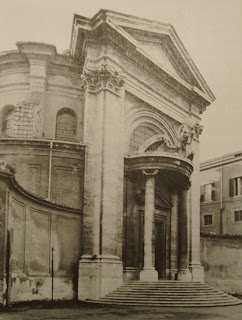
Figure 1 – Image showing S. Andrea al Quirinale’s prophetic façade.
Bernini’s overall design of S. Andrea adds to the welcoming feeling created by the church’s exterior and serves to incite a spatial unity between the parishioners and the mass, furthering the Catholic Church’s post-Reformation goals. Only about 115 ft. wide and less than 100 ft. deep[5] the small church forms a pure oval in plan, as seen in Figure 2. Thus, worshippers are drawn right into the space where mass is taking place. Bernini has replaced the side aisles, chapels, and long naves of the Renaissance with a very intimate space that inseparably unites the mass and the congregation. This central-type design also demonstrates Bernini’s belief in the importance of simple geometrical forms and classical figures, such as the circle in building design. Though S. Andrea forms a transverse oval, its plan still references to a classical plan. From this simple form, Bernini could both create the feeling of unity the Church wanted to establish with its parishioners, and build from this classical base to give the space an emotive coloring through the multiplication of edges and vibrant blurring of line[6] that would elicit an emotional response.

Figure 2 – Plan of S. Andrea al Quirinale illustrating the spatial unity of the church
Bernini’s brilliant use of color, sculpture, and light in S. Andrea’s interior dramatically accomplishes the new Baroque desires of the Church. “Built to impress rather than to welcome, it [S. Andrea’s interior] is an attention-grabbing celebration of bravado and audacity in marble, stucco, and gilt, an ecclesiastical stage set unparalleled in Rome.”[7] Upon entering, visitors are first overwhelmed by the church’s striking color scheme. Eight colossal white square Corinthian pilasters mark out the principal spatial configuration of the church, while the lesser pilasters and free freestanding columns are covered in delicate, white-speckled, rose-tinted marble.[8] This swirl of colored marble rests between a dome that glistens gold and a patterned black and white marble floor. Bernini placed the white Corinthian pilasters in orderly rhythm around the church to focus the visitor’s eye and nudge it inexorably toward the main altar, which stands in a high narrow niche behind four massive Corinthian columns.[9] Here, light from a concealed window theatrically streams down into the apse and illuminates a picture frame supported by cherubs and solar rays, all in gold.[10] This concealed light source has a far different effect than the eight nearly square windows that sit just below the beginnings of S. Andrea’s dome. While the eight square windows bath the church in a warm natural light, the conceal window draws all eyes to the painting it illuminates behind the shadow separating the church’s main space from the depths of the high altar. The painting, The Crucifixion of St. Andrew by Guglielmo Cortes, depicts Andrew, one of Jesus’s first disciples, just before his death. Hung on a saltire cross, meaning essentially two pieces of wood arranged in a large X, Andrew is seen gazing heavenward. As parishioners follow his gaze, their eyes come to the focal point of the church, Bernini’s enormous figure of Saint Andrew, which sits on a stucco cloud atop the center of the heavy semicircular pediment that caps the altar (Figure 3).[11] As said by Morrissey, “this statue of an old man, his lanky arms outstretched in surrender, his knobby left knee bent out into the church as if he were about to stumble from his amorphous aerie, his simple face and euphoric gaze lifted toward the bliss of heaven, is full of emotion, almost quivering with the thrill of his ascent into paradise.”[12] Through his use of theatricality, Bernini has drawn churchgoers into the ascension of Andrew and they can now follow his gaze still further into S. Andrea’s golden dome representing the vault of heaven. Around the dome, rest two rings of figures. Fishermen carrying oars, shells, reeds, and nets rest over the windows at the dome’s base and represent St. Andrew’s earthly occupation. Above them, encircling an oculus that emits a golden light let in by the colored glass of the lantern sit a ring of putti. Higher still, craved into the lantern’s dome flies a dove cleverly representing both the Holy Spirit of Andrew’s heavenly home and the Pamphili family. In all, 138 stucco figures of various sizes cover the upper reaches of the church.[13] Bernini’s dramatically theatrical use of color, light, and sculptor beautifully accomplishes the Baroque desires of the Church by eliciting an emotional reaction from worshippers as they participate in the miracle of Saint Andrew’s ascension.

Figure 3 – Image showing the sculptural and luminal effects of S. Andrea’s interior.
Taking fourteen years to complete, San Andrea al Quirinale is perhaps the most innately dramatic building Bernini ever designed by himself and certainly the structure he most loved.[14] Acclaimed as one of the finest achievements of Bernini’s long and brilliant career,[15] S. Andrea stands as a monumental piece of Baroque architecture whose innovative design both beautifully exemplifies the post-Reformation attitude of the Catholic Church and testifies to the genius of Bernini. S. Andrea’s welcoming design, unifying form, and richly decorated theatrical interior elicit personal and emotional reactions from the church’s parishioners and, in so doing, welcome people back to Catholicism. Bernini’s innovative masterpiece has not only greatly influenced the evolution of church architecture, but also continues to awe modern churchgoers.
Works Cited
Ching, Francis D.K., Mark M. Jarzombek, and Vikramaditya Prakash. A Global History of Architetcure. Hoboken, New Jersey: John Wiley & Sons, Inc., 2007.
Conners, Joseph, “Bernini’s S. Andrea al Quirinale: Payments and Planning,” JSAH, XLI: 1, March, 1982.
Minor, Vernon Hyde, selections on “Setting the Stage”, in Ch. 2. New York, 1999.
Morrissey, Jake. The Genius in the Design; Bernini, Borromini, and the Rivalry that Transformed Rome. New York: Jake Morrissey, 2005.
Wallace, Robert. The World of Bernini. New York: Time-Life Books, 1970.
Images Cited
Figure 1
Trachtenberg, Marvin, and Isabelle Hyman. Architecture, from Prehistory to Postmodernity. Second Edition. New York: H.N. Abrams, 2002. 331.
Figure 2
McLaren, Brian. “S Andrea al Quirinale, plan.” Online image. Architecture 351. Romanesque, Gothic, and Renaissance Architecture. University of Washington; Department of Architecture.http://online.caup.washington.edu/courses/ARCH351/Assets/Slides/Lecture18.gallery/source/s_andrea_al_quirinale__pla.htm. (accessed February 25, 2007).
Figure 3
McLaren, Brian. “S Andrea al Quirinale, dome.” Online image. Architecture 351. Romanesque, Gothic, and Renaissance Architecture. University of Washington; Department of Architecture.http://online.caup.washington.edu/courses/ARCH351/Assets/Slides/Lecture18.gallery/source/s_andrea_al_quirinale__dom.htm. (accessed February 25, 2007).
[1] Conners, Joseph, “Bernini’s S. Andrea al Quirinale: Payments and Planning,” JSAH, XLI: 1, March, 1982, 16-17.
[2] Ibid., 22.
[3] Marvin Trachtenberg and Isabelle Hyman, Architecture, from Prehistory to Postmodernity, Second Edition, New York: H.N. Abrams, 2002, 331.
[4] Ibid.
[5] Wallace, Robert, The World of Bernini, New York: Time-Life Books, 1970.
[6] Conners, “Payment and Planning,” 33.
[7] Morrissey, Jake, The Genius in the Design; Bernini, Borromini, and the Rivalry that Transformed Rome, New York: Jake Morrissey, 2005, 247-248.
[8] Ching, Francis D.K., Mark M. Jarzombek, and Vikramaditya Prakash, A Global History of Architetcure, Hoboken, New Jersey: John Wiley & Sons, Inc., 2007, 504.
[9] Morrissey, The Genius in the Design, 248.
[10] Ching, A Global History of Architetcure, 504.
[11] Morrissey, The Genius in the Design, 250.
[12] Ibid.
[13] Conners, “Payment and Planning,” 20.
[14] Morrissey, The Genius in the Design, 244.
[15]
Friday, September 14, 2007
Insieme
Below a canopy of umbrella pines and orange trees two people perched on a ledge of sunlit marble. Both intermittently took advantage of the view offered by the Aventine, glancing just for a moment at the lapping Tiber River and the domes beyond before returning to their respective materials, he a newspaper and she a schoolgirl’s notebook, only once catching the glance of the other.
Between them groups of sightseers posed for pictures, smiling long into the cameras of their friends before turning to admire the cityscape that had inspired them to climb the cobbled hill. As the lunch hour approached, the groups drifted away, leaving the two strangers alone on either end of the balcony.
After taking one last look at the scene stretched before her, the girl slid her journal into a worn canvas bag at her side with a well-practiced gesture. More than a decade younger than the man sitting opposite, when she rose from the ledge and turned to walk away long black braids swayed behind her.
She settled herself once again on a shadowed bench beside the path that dissected the little park, and withdrew the notebook to properly take in the sound of the fountain. When the bells of Saint Sabina told the hour she finished her contemplation of whether the water that trickled down from the fountain’s weary spout had traveled atop the arches of the ancients to reach her. When she got up to leave, she noticed indistinctly that her former sitting companion had also found his way to the back of the park.
Down the hill, she thought of nothing but the red flowers that grew between the walls of brick and the orange curves of the modern Roman home. Along the River Tiber, its green algae washing slowly against its stiff banks, she kicked the leaves, unable to resist the smile that seemed to envelop her at the sound of their familiar crunch.
“Abiteremmo insieme?”
He waited for an answer as he matched her stride, the well-groomed Italian from the park above, giving her a moment to take in his unexpected presence and the closeness of him in his pressed white shirt and fitted jeans.
She turned her head to look into his face, and gave her standard answer, “Non parlo Italiano” with an apologetic smile. He looked her twice over, taking in her brown dress and flip-flops. “English then. Shall we walk together?” The comprehension in her eyes needed no spoken confirmation.
Unarmed of any reasonable excuse and bound within the confines of her native language, she answered, “Sure.”
“Sure,” the wheels turned in his head as he tried to remember the meaning of such an ugly word. “Va bene. Where are you going?” He purposefully asked the question lightly.
“Campo de’ Fiori,” she said. Glancing up, she saw a smile cross his lips. “Ah, Campo de’ Fiori. That’s quite a walk.”
She laughed smally. “And you, where are you going?”
“Wherever you are,” he replied, and, hearing the boldness of his answer ring in his own ears, he hastily followed with the other question he needed to speak. “What is your name?”
“Brianna,” she responded, pronouncing the a’s as an American, short and long. “Brianna,” he repeated, she thought, as if to correct her, rolling the rrrrrr indefinitely and looking very pleased with the sound of it. “Brrrriaanna. Very nice.”
“What is your name?”
“Giorgio,” he said and paused, waiting for her to own his name as he had hers, but Brianna did not attempt to repronounce.
Walking side by side, the two covered the eastern ends of the Ponte Palantino, Fabrico, and Garibaldi in polite conversation interspersed with the laughter she designed to dismiss Giorgio’s more complicated questions. When he grew frustrated with Brianna’s insistence on holding her words behind her teeth, he playfully provoked her. “Come now Brianna, surprise me.” She answered short and sweet, forcing him to let his questions die away.
At the end of the Vai dei Giubbonari, enveloped in the hustle and bustle of the fruit vendors, they arrived at Campo de’ Fiori. She walked him past the looming statue that centered the square, thinking rapidly where best to leave him. When she could see the face of Giordano Bruno, she planted her feet with finality on the squares of stone worn smooth by the thousands who had crossed there b before either knew how to stand.
“You have arrived.” He stated it without question.
“I have.” Unsure how to end this last half hour of her life, she extended her hand and shook the one that met it with determined cordiality, rooting the smile to her face.
“I will see you around here again.” She heard the politeness in his voice, but could not ignore the stress on the word – I will. Its eeriness followed her as she walked across the square and persisted as she stepped though the heavy wooden door that separated her apartment building from the space where Giorgio stood watching.
Between them groups of sightseers posed for pictures, smiling long into the cameras of their friends before turning to admire the cityscape that had inspired them to climb the cobbled hill. As the lunch hour approached, the groups drifted away, leaving the two strangers alone on either end of the balcony.
After taking one last look at the scene stretched before her, the girl slid her journal into a worn canvas bag at her side with a well-practiced gesture. More than a decade younger than the man sitting opposite, when she rose from the ledge and turned to walk away long black braids swayed behind her.
She settled herself once again on a shadowed bench beside the path that dissected the little park, and withdrew the notebook to properly take in the sound of the fountain. When the bells of Saint Sabina told the hour she finished her contemplation of whether the water that trickled down from the fountain’s weary spout had traveled atop the arches of the ancients to reach her. When she got up to leave, she noticed indistinctly that her former sitting companion had also found his way to the back of the park.
Down the hill, she thought of nothing but the red flowers that grew between the walls of brick and the orange curves of the modern Roman home. Along the River Tiber, its green algae washing slowly against its stiff banks, she kicked the leaves, unable to resist the smile that seemed to envelop her at the sound of their familiar crunch.
“Abiteremmo insieme?”
He waited for an answer as he matched her stride, the well-groomed Italian from the park above, giving her a moment to take in his unexpected presence and the closeness of him in his pressed white shirt and fitted jeans.
She turned her head to look into his face, and gave her standard answer, “Non parlo Italiano” with an apologetic smile. He looked her twice over, taking in her brown dress and flip-flops. “English then. Shall we walk together?” The comprehension in her eyes needed no spoken confirmation.
Unarmed of any reasonable excuse and bound within the confines of her native language, she answered, “Sure.”
“Sure,” the wheels turned in his head as he tried to remember the meaning of such an ugly word. “Va bene. Where are you going?” He purposefully asked the question lightly.
“Campo de’ Fiori,” she said. Glancing up, she saw a smile cross his lips. “Ah, Campo de’ Fiori. That’s quite a walk.”
She laughed smally. “And you, where are you going?”
“Wherever you are,” he replied, and, hearing the boldness of his answer ring in his own ears, he hastily followed with the other question he needed to speak. “What is your name?”
“Brianna,” she responded, pronouncing the a’s as an American, short and long. “Brianna,” he repeated, she thought, as if to correct her, rolling the rrrrrr indefinitely and looking very pleased with the sound of it. “Brrrriaanna. Very nice.”
“What is your name?”
“Giorgio,” he said and paused, waiting for her to own his name as he had hers, but Brianna did not attempt to repronounce.
Walking side by side, the two covered the eastern ends of the Ponte Palantino, Fabrico, and Garibaldi in polite conversation interspersed with the laughter she designed to dismiss Giorgio’s more complicated questions. When he grew frustrated with Brianna’s insistence on holding her words behind her teeth, he playfully provoked her. “Come now Brianna, surprise me.” She answered short and sweet, forcing him to let his questions die away.
At the end of the Vai dei Giubbonari, enveloped in the hustle and bustle of the fruit vendors, they arrived at Campo de’ Fiori. She walked him past the looming statue that centered the square, thinking rapidly where best to leave him. When she could see the face of Giordano Bruno, she planted her feet with finality on the squares of stone worn smooth by the thousands who had crossed there b before either knew how to stand.
“You have arrived.” He stated it without question.
“I have.” Unsure how to end this last half hour of her life, she extended her hand and shook the one that met it with determined cordiality, rooting the smile to her face.
“I will see you around here again.” She heard the politeness in his voice, but could not ignore the stress on the word – I will. Its eeriness followed her as she walked across the square and persisted as she stepped though the heavy wooden door that separated her apartment building from the space where Giorgio stood watching.
Subscribe to:
Posts (Atom)